Vietnam: *and pretty much most of Asia
Traffic accidents occur frequently, often causing death or serious injury. Motorbike riders and pedestrians are common victims. Driving standards are poor, vehicles and roads are often badly maintained, and roads in major cities are heavily congested. Rain can flood potholes and roads, especially those in the north, can become impassable during the rainy season.
- Driving without a driver’s license is illegal.
- International Driving Permits (IDPs) are accepted in Vietnam. You may only drive the category of vehicle for which your permit is valid. You’ll need to show both the IDP and your countries driving license to the authorities as required. Don’t use your passport as a deposit for hiring vehicles or in place of a fine in the event of a traffic offense. If you don’t have an IDP and you want to drive a car or motorcycle you’ll need to get a Vietnamese driving license from the Hanoi Department of Public Works and Transportation (telephone: +84 4 3843 5325) or the Ho Chi Minh City Department of Public Works and Transportation (telephone: +84 8 3829 0451 or 0452).
- Not wearing a helmet is also illegal, both for the driver and the passenger.
- Make sure your Travel Insurance is comprehensive. If you are involved in a traffic accident, you may face criminal charges and have to pay compensation if someone is injured. You may be prohibited from leaving the country before paying this compensation.
- It is essential that you have some experience riding a motorbike.
- Get a good quality motorbike helmet.
- Understand the roads on which you plan to travel.
- Traveling after dark is seriously very dangerous.
- If you’re involved in an accident or subject to an investigation, offer the police your full co-operation and inform the your national Embassy in Hanoi or Consulate General in Hoi Chi Minh City.
BASIC SAFETY TIPS:
- Check you bike daily before riding.
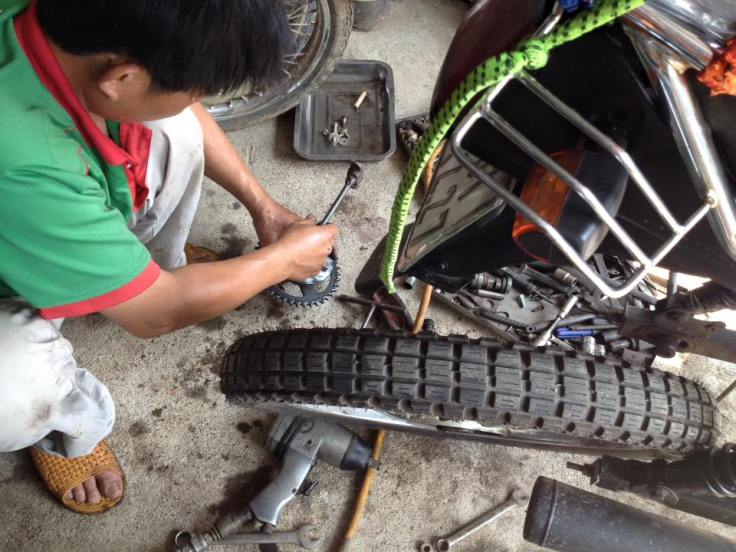
- Have the mechanic who made repairs ride it first before you do.
Daily Check List; brakes, clutch, oil, any thing is loose, chain, horn, lights.
- Use your horn & headlights.
- Don´t drive at night.
- Stay alert.
- Ride with in your capabilities.
- Wear Protective Clothing.
- Carry a medical kit.
*10 common motorcycle accidents and how to avoid them.
PROTECTIVE CLOTHING:
Helmet: Bring your own as most are just useless made of nothing. A full faced helmet is always better. Make sure your helmet is not loose on your head, has a rain or sun visor and the straps to keep it on your head work. Its worth spending money on. After all its your brain. Dealers will add one into the deal when purchasing a bike,so will backpackers who are selling on their bikes but most of them will be crappy.
Gloves: Light weight breathable bike gloves serve as protection from a fall, dirt and the sun as well as giving you better grip and on long hauls some support.
Boots: DO NOT ride in flip-flops, they give you no grip. I ride in my high tops they have good tread and are breathable and have some ankle protection.
Jacket: Ponchos just really don’t do it. Buy a lightweight waterproof jacket. They sell North Face factory rejects for $20 – $25 everywhere.
RIDING TIPS:
- Speeding, Cops don´t like speeding but your on a honda 110 so you won´t be very able to go much faster then 80 if your lucky. What that means is that everything else will go faster then you over taking randomly. Just ride at your pace after all its not a race.
- Buses will sneak up behind you and honk loudly startling you. Relax don´t panic, just move over allowing them to pass.
- On coming traffic seam to head straight at you in your lane, Flash them with your head lights so they can see you.
- Getting out of the cities is tough so take your motorbike on the train to exit the city until you get a bit more used to riding there. Get off at the first main stop and ride from there. The cities are crazy getting in and out and this can take up to several hours. There are one way systems you get trapped in, massive of lorries and bikes literally bumper to bumper crawling along in rush hours. If you are leaving the city leave outside of rush hours. (normally after lunch.) They get up very early in the morning (4am) so city roads are busy early mornings.
- Mountains passes, have sharp hairpin turns and you never know what may be coming up around the bends. Large oncoming buses or lorries in your lane, often over taking each other or a massive dirt patch or holes in the road may be ahead. Slow down as you go into the corner take it tightly on the inside and come out of it at a regular speed in your lane.
- Luggage motorbike racks are basically a bad idea. There are often welded on weakly, or tied on with simply bungie cords.They hang of the back of bikes with all the weight of your bag on them. This creates too much weight on the back of your bike, adding motion during turns you just don’t need. Pack light and take off the rack and place the bag on your back seat. It also will make for a comfortable seat rest.
- Dogs chasing you will startle you but they won´t do much more so wave a leg at them or honk your horn at them as you approach them.
- Water buffalo are big, best not to hit one, so slow down and honk your horn at it until it moves out of your way.
- Hitting a dirt patch, don´t break suddenly! ride at your speed though it.
- Large every thing hangs of the back of all kind of verticals so leave ample amount of space between you and what ever it may be in front of you.
- Move forward confidently in crowded areas, they are used to moving motorbikes and won´t hit you they will find there way around you but don´t bumper crawl as sudden stops happen frequently for various reasons. (someone randomly crossing the road)
- People and bikes crossing roads randomly happens all the time, slow down when approaching any intersection or small village as people just pull out.
 motorgirltravels
Recent Comments