The Capital City of Vietnam, Hanoi is divided into four main districts; Hai Ba Trung, Dong Da, Ba Dinh District (aka the French Quarter) and Hoan Kiem District (aka the Old Quarter). The most popular area the Old Quarter being with in the Hoan Kiem District around the Hoan Kiem Lake. Southeast of Hoan Kiem Lake is the former French Quarter Quarter residing in the Hai Ba Tring .
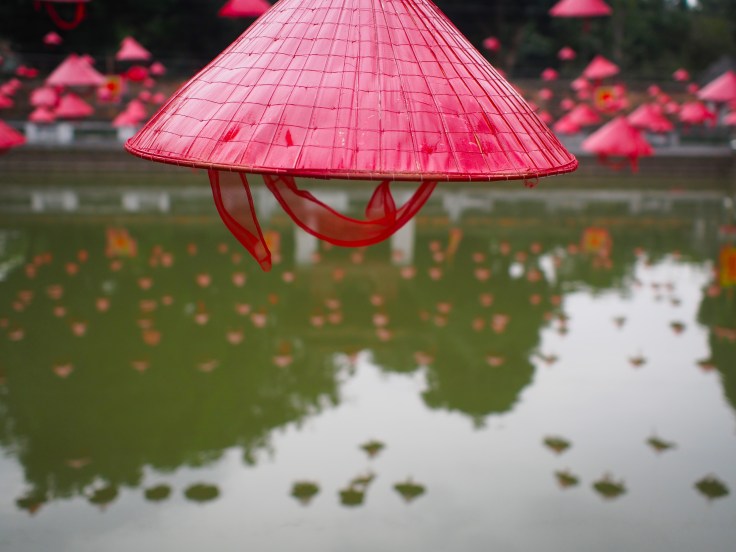
Walking though the streets takes a little getting used to on first arrival.
- The streets are a mess of motorbikes whizzing about in clusters and when crossing the street there is one important lesson to learn; always walk forward and NEVER step backwards, bikes will maneuver around you.
There are plenty of things to do in this charming city and walking about to the different districts is easy to do. At the beginning of the 20th century The Old Quarter within the Hoàn Kiếm District was nicknamed 36 streets due to the 36 guilds that originally settled there amongst its original 36 streets. It´s wonderfully quirky and best discover on foot, the oldest, lively and commercial area is full of narrow alley´s ancient tube houses, trendy coffee houses and bars, hostels and the Dong commercial Market.
Theres also the Hồ commercial Kiếm Lake (Turtle Lake) located in the central area of this district. It´s said that General Lê Lợi was handed a magical sword by a divine golden turtle that lived in the lake. Hồ commercial Kiếm, meaning “Lake of the Returned Sword” or “Lake of the Restored Sword”. A small pagoda called Thap Rua (Turtle Tower) sits in the center of the lake on a small islet and was built in the mid-19th century to commemorate the mythical story about the sword.
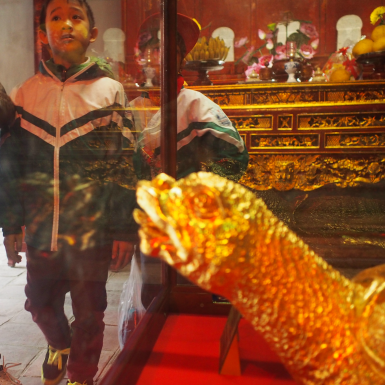
Take a walk around the lake and venture over the red- painted arched bridge The Huc Bridge (sunbeam bridge) into an island at the northern end of thew lake. There is a small entrance fee 30,000 dong but worth it to enter this elaborately decorated Jade Mountain the Den Ngou Son Temple. (Jade mountain) was built to honor the philosopher and the national hero, Trần Hưng Đạo. Inside there is giant painted gold Hoàn Kiếm turtle incase in a glass display case, it apparently used to live in the lake and died in 1968.
Located in the Ba Dinh District the Văn Miếu – Quốc Tử Giám (The Temple of Literature ) called correctly the Temple of Confucius was built in 1070 at the time of Emperor Lý Thánh Tông and is dedicated to honor the Chinese philosopher Confucius. Entry cost is 30,000 dong.
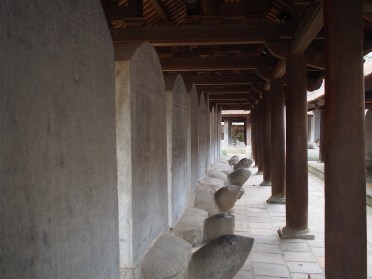
It was a place for higher learning and within the walled complex are many structures and courtyards. One shelters giant turtle Steles (tortoise pedestals) inscribed with the names of passed scholars that date from the 15th – 18th century. The Temple of Confucius sits in the center, inside the red lacquered gold adorned pillars are statues of the great philosophers Confucius and Chu Văn An and their disciples. In the gardens is a pool named inscribed Quang Tinh ( well of heavenly Clarity) surrounding are various smaller pavilions that where places where offerings and or areas of study. while wandering about you will mingle with parties of school children, visiting monks and tourists.
On the out skirts of the Botanical Garden is the Ho Chi Minh Museum, its open everyday apart from Mondays. Entrance fee 10,000 dong. $0.50. The museum basically is a description of Ho Chi Minh´s life set out though eight topics; 1890-1910 his youth,the second the next ten years his travels to find a way to reduce his country from colonialism,then three topics are dedicated to covering 1920-1945 and how he was influenced Marxism and Leninism and translated it into founding the Communist party and striving for national independence.topics six and seven 1945 -1969 discuss his political life as a national hero until he passed away. Its story telling themes are often bizarre and full of personal memorabilia. You will leave feeling quite baffled but hopefully intrigued to read more about the ascent of the Communist party in Vietnam.
Not to be confused with the Ho Chi Minh Mausoleum which is located in the same district on the west side of Ba Dinh Square. Completed in 1975 it houses the embalmed body of Ho Chi Minh in a glass case with dim lights and is protected by a military guard. Many Vietnamese especially from the North travel to line up and pay their respects to their favored resting leader. Inside is a sober atmosphere and inappropriate clothing is not permitted. Its nice to know that his originally wishes allegedly where actually to be cremated and his ashes scatted thought the country to symbolize national unity.
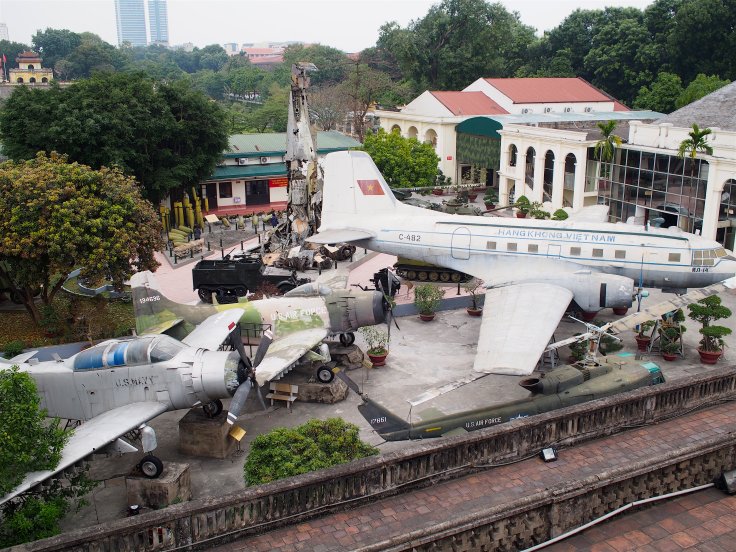
The Vietnam Military History Museum is again located in the Ba Dinh District and is housed within the former French barracks, the entrance fee is 20,000 vnd. Its not a modern structure and many of the areas that house the displays are a little shabby but it still worth a visit just to fully comprehend how war torn this country has been.


Thirty Galleries trace the history of the Vietnam armed forces and is an impressing collection complemented with archival photography, documents and footage. The court yard is filled with a collection of fighter planes, weapons and tanks. Personally I found the mini dioramas of interest, especially the ones which depicted the many tunnels built to house military and villagers from the air sticks during the American war. The blog site havecamerawilltravel.com has a a lot photos of the exhibits.
The Old Quarter at night is a great place to get lost in, its narrow little alleys are filled with lots of small shops, food places, bars and coffee houses. Old charm meets new world and is a mash oaf quirkiness. The pavements are a splash of colorful little plastic seating that spill from food vendors stations, people bustling for a seat upon them at all times of the day.
Bia Hoi Junction is the happening little corner of Ta Hien street and Luong Ngoc Quyen street, theres little to no traffic though the surrounding streets so its a welcomed break walking about here. Bia Hoi Hanoi is a local cheap beer ´Bia´meaning beer and ´Hoi´ meaning air, It cost about 10,000 vnd. for one glass and in other regions its even cheaper but it´s only contains about 4% alcohol. Locals crowd here nightly along with plenty of backpackers who gravitate to the cheap food vendors, beer and lively atmosphere. Along the street are also plenty of different varieties of local street foods served in two – four table cubby hole restaurants.
KOTO restaurant on Van Mieu, is located close to the The Temple of Literature. The KOTO venture began about ten years ago, when the founder, Jimmy Pham, opened a small sandwich shop in Hanoi as a means to help youth living off the streets by providing them with jobs. Now its a larger foundation supported by an international body of individual and corporate sponsors, donors, partners and Goodwill Ambassadors committed to the “KOTO – Know One, Teach One” principle and its efforts to improve the lives of Vietnamese youth. Young trainers between the age of 16- 22 are taught culinary skills and restaurant management skills. The food is great and every young person i met and talked with was simply charming and excited to tell you about the different styles of foods on their menu. So miss a few beers one night, have a nice meal and support local youth.
Other things to do:
- Museum of Women
- Museum of Ethnology
- Hoa Lo Prison
- National Museum of Vietnamese History
- Vietnam Fine Arts Museum
- The Opera House
- Thang Long Water Puppet Theatre
- Dong Xuan Market
- Bach Ma Temple
 motorgirltravels
Recent Comments